

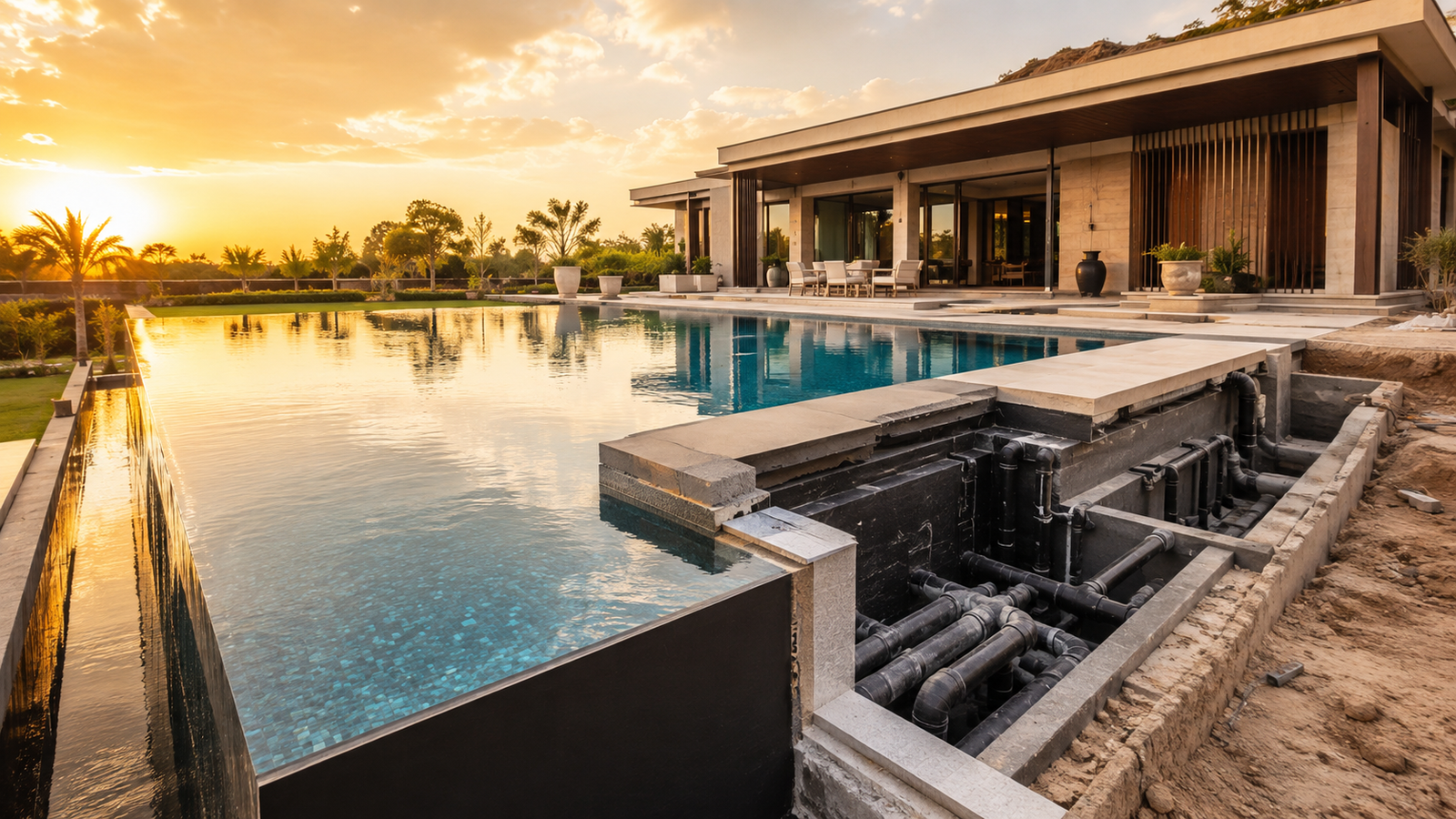
A swimming pool is a structure, waterproof vessel, circulation system, electrical environment and landscape feature at the same time. Choosing a swimming pool contractor from finish photographs alone overlooks the design calculations, concealed pipework, plant-room access and testing that determine long-term performance.
The appointment should define who owns architecture, structural engineering, hydraulic design, waterproofing, equipment selection, specialist electrical work and commissioning. Project-specific safety and statutory requirements must be confirmed by qualified professionals.
Begin With Pool Use and Location
Define whether the pool is for exercise, family recreation, children, entertaining or visual reflection. Length, depth, steps, benches and temperature expectations should follow use. Review sunlight, trees, privacy, wind, basement spaces below and the relationship to the house.
An infinity edge or rooftop location creates different structural, waterproofing and overflow challenges from a ground-level pool. Ask the team to explain these implications before concept approval.
Swimming Pool Contractor Design Responsibility
Request a responsibility matrix covering pool shell, geotechnical inputs, waterproofing, hydraulics, lighting, drainage, heating, landscape and finishes. If several parties design separate pieces, appoint one lead coordinator to close the interfaces.
The specialist should issue construction and shop drawings, equipment schedules, pipe sizing and control philosophy for review before work begins.
Swimming Pool Contractor Structural Coordination
The structural engineer must design the shell, joints and supports for actual conditions. Groundwater, nearby basements, retaining walls or a suspended slab can change the solution. Do not let the pool contractor alter reinforcement or penetrations without formal approval.
Sequence sleeves, puddle flanges and embedded fittings with reinforcement. Late coring through a completed shell introduces avoidable risk.
Swimming Pool Contractor Waterproofing Plan
Waterproofing needs a complete approved system including substrate, joints, penetrations, corners and protection. Clarify whether the shell itself, an applied membrane or a combined approach provides the barrier. Coordinate the selected finish adhesive and grout for compatibility.
Mock up a critical corner with an inlet, light fitting or overflow detail. Record each concealed stage and test before expensive stone or mosaic is installed.
Swimming Pool Contractor Hydraulic Design
The circulation system should address pool volume, turnover, inlets, outlets, skimmers or overflow channels, balancing tanks and filtration. Poor distribution can create dead zones even when large equipment is installed. Ask for calculations and a labelled schematic.
Plant-room layout must allow technicians to reach pumps, filters, valves and dosing equipment. Provide floor drainage, ventilation, lighting and a safe route for replacement.
Electrical and User Safety
Pool lighting, pumps, controls and nearby sockets require specialist design, suitable equipment, earthing, bonding and protection. Keep electrical panels and equipment in approved locations. Slippery edges, sudden depth changes and poorly visible steps also create risk.
Coordinate barriers, covers, rescue provisions and supervision expectations for the household. Final measures must follow the applicable project requirements.
Swimming Pool Contractor Finish Review
Stone, tile and mosaic should be suitable for continuous immersion, chemicals and the intended slip resistance. Review shade variation, sheet lines, corners, grout colour and edge profiles at full scale. Natural stone may require specific testing and treatment.
Approve samples underwater where practical, because colour changes significantly after filling and under pool lighting.
Heating, Covers and Operating Cost
If extended seasonal use is expected, compare heating options, insulation and covers as a system. Evaporation can drive heat and water loss. Equipment should be sized from the actual pool, climate and usage rather than a generic package.
Ask for estimated power, water, chemical and maintenance needs. Luxury should include clarity about operation.
Commissioning and Handover
Pressure-test pipework before concealment and verify the shell and waterproofing through the approved procedure. At start-up, balance flows, commission controls, check water treatment and train the responsible operator. Record baseline readings.
Handover should include as-built routes, equipment manuals, warranty details, maintenance schedules, spare finishes and emergency contacts.
Pool Contractor Selection Checklist
- Review comparable pools and speak to past clients.
- Define design and interface responsibilities.
- Check structural and waterproofing coordination.
- Review hydraulic calculations and plant-room access.
- Approve safety, electrical and finish details.
- Agree tests, mock-ups and commissioning records.
- Compare lifecycle support, not only construction price.
Build the System Behind the View
The right pool specialist can explain the hidden system as clearly as the finished waterline. Aakriti Studio coordinates architecture, structure, landscape and specialist execution so a villa pool becomes a dependable part of the property rather than an isolated feature.


