In architecture, trends change quickly. Design styles that appear fashionable today may feel outdated within a decade. However, truly great homes remain elegant for generations. This is the essence of timeless architecture.
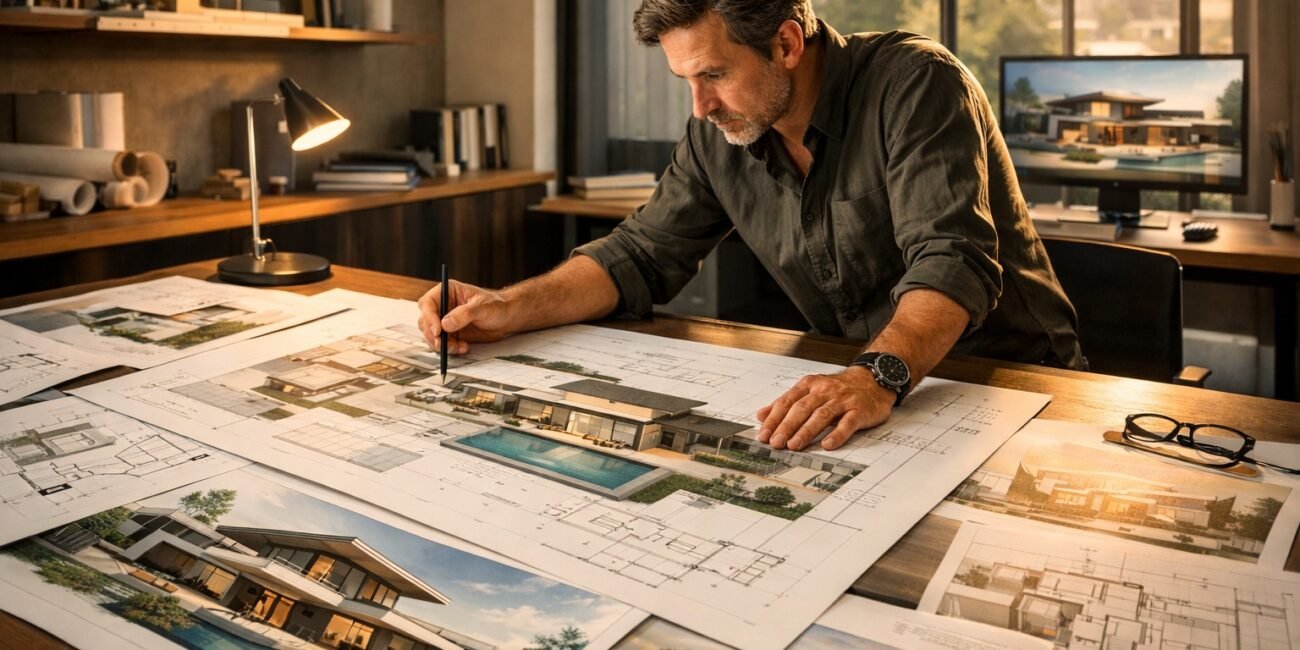
Designing a timeless luxury home requires a deep understanding of proportion, materials, and spatial harmony. Instead of relying on short-lived design trends, architects focus on principles that have remained relevant throughout architectural history.
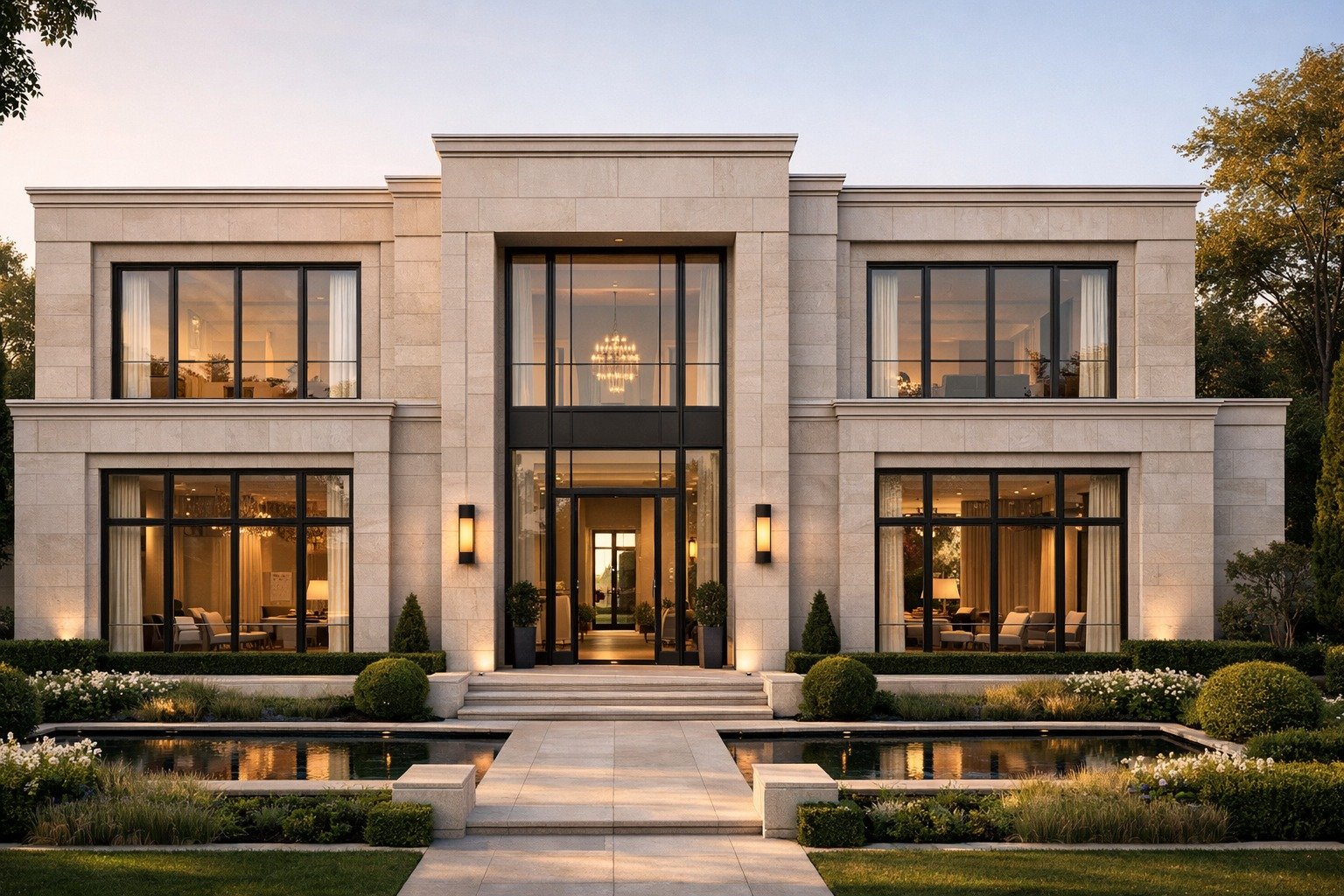
One of the most fundamental principles of timeless architecture is proportion. The relationship between height, width, openings, and structural elements determines whether a building feels balanced or visually uncomfortable. When proportions are correct, architecture feels calm, refined, and naturally pleasing to the eye.
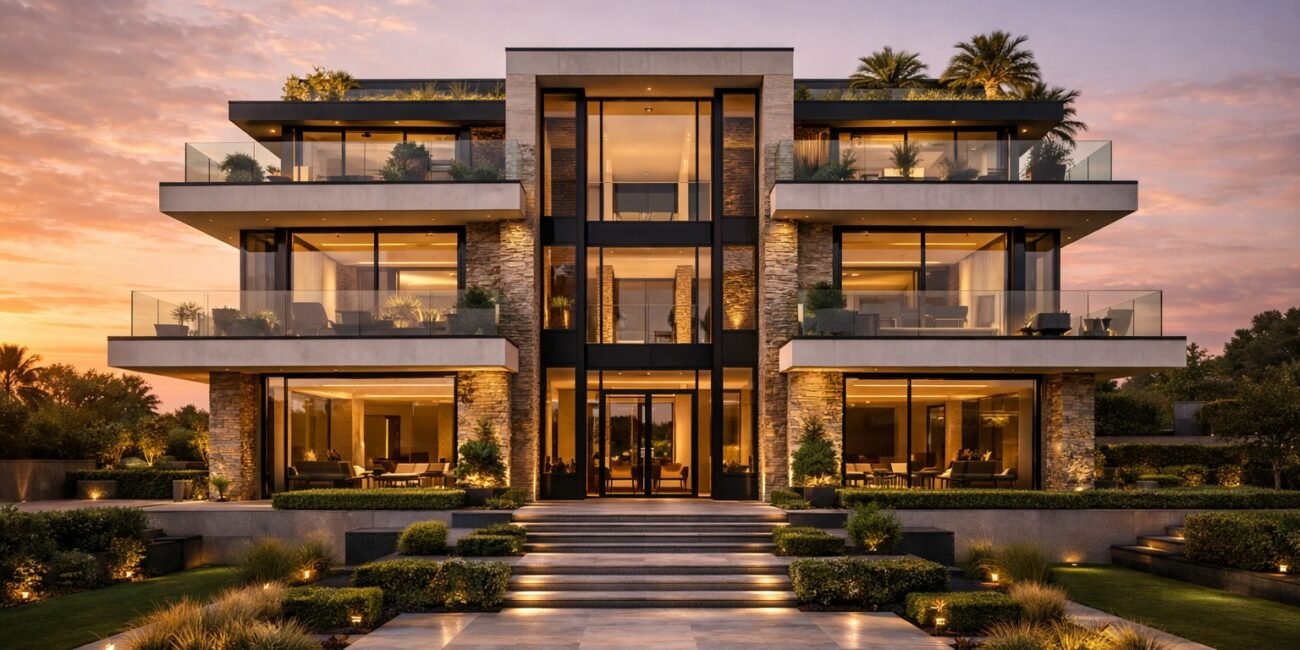
Another defining element of timeless homes is simplicity. Minimal yet elegant architectural compositions often age far better than overly complex designs. Clean lines, balanced façades, and restrained detailing allow the building to maintain its relevance even as design trends evolve.
Material selection also plays a crucial role in ensuring longevity. Natural materials such as stone, marble, wood, and metal tend to age gracefully over time. Instead of deteriorating visually, they develop character and depth. This is why many luxury residences incorporate natural stone cladding, wooden elements, and textured materials that enhance the architectural identity of the building.
Light is another essential aspect of timeless architecture. Homes designed with abundant natural light tend to feel more comfortable, healthy, and visually appealing. Skylights, courtyards, and large openings help create dynamic interiors where light interacts with materials throughout the day.
Architects also consider how a home will function over time. Flexible layouts, adaptable spaces, and efficient circulation ensure that the house continues to serve the evolving needs of the residents. For example, spaces that can transition from study areas to guest rooms or from family lounges to entertainment zones provide long-term usability.
Timeless architecture also respects the surrounding environment. Instead of creating structures that feel disconnected from their context, architects design homes that complement the neighborhood and landscape. In South Delhi, this often means integrating greenery, terraces, and natural elements into the design.
Ultimately, timeless luxury homes are not defined by extravagance but by clarity and refinement. When architecture is guided by strong design principles rather than temporary trends, the result is a residence that remains beautiful and relevant for decades.