

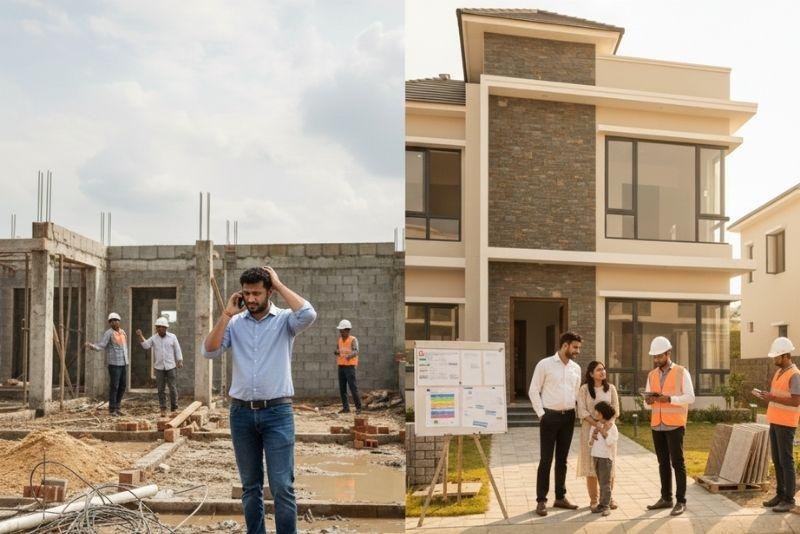
Turnkey vs traditional construction is one of the most important comparisons homeowners should understand before starting a residential project. Both models can deliver a completed home, but the experience, responsibility, coordination, cost control, and quality outcome can be very different.
In traditional construction, the homeowner usually hires separate people for different stages of the project. In turnkey construction, one professional team manages the entire process from design to final handover. Choosing the right model can save time, reduce stress, and protect the final quality of your home.
Turnkey vs Traditional Construction: Key Difference
The biggest difference between turnkey and traditional construction is accountability. In a traditional model, responsibility is divided between multiple vendors. The architect may create drawings, the contractor may manage civil work, the electrician may handle wiring, and the carpenter may execute furniture. If something goes wrong, the client often has to identify who is responsible.
In a turnkey model, one team takes responsibility for the complete scope. This creates a single point of contact for the client and reduces confusion between design, procurement, execution, and finishing.
What is Traditional Construction?
Traditional construction is the older project method where the client coordinates between different professionals. The homeowner may separately hire an architect, contractor, plumber, electrician, carpenter, painter, tile vendor, stone vendor, lighting supplier, and furniture team.
This gives the client more direct control, but it also requires more time and construction knowledge. The client has to compare quotations, check material quality, approve samples, track labour progress, manage delays, and solve vendor conflicts. For small projects, this may work. For luxury homes or full-house interiors, it can become stressful.
What is Turnkey Construction?
Turnkey construction is a complete project delivery model where one firm manages design coordination, execution, vendor management, material planning, site supervision, and final handover. The client remains involved in major decisions but does not have to manage daily site operations.
This model is especially useful when the project requires strong design control. For example, a luxury home needs proper alignment between flooring, ceiling, lighting, furniture, wall panels, doors, bathroom finishes, and facade details. Turnkey execution helps keep all these elements coordinated.
Cost Comparison
Traditional construction may appear cheaper at the beginning because each vendor gives a separate quotation. However, the final cost can increase because of missing items, unclear specifications, material wastage, rework, delays, and poor coordination.
Turnkey construction may look more structured or slightly higher upfront, but it usually includes planning, supervision, quality control, vendor coordination, and responsibility. A clear BOQ helps the client understand what is included and what is excluded. For premium homes, this transparency is more valuable than choosing the lowest quotation.
Timeline Comparison
Traditional construction often faces delays when one vendor waits for another. The ceiling team may wait for electrical work, the painter may wait for carpentry, or the stone team may wait for civil correction. Since the client is coordinating everyone, delays can become difficult to control.
Turnkey construction works with a planned sequence. Civil work, services, ceiling, flooring, carpentry, painting, lighting, and installation are scheduled under one project system. This helps reduce waiting time and improves the chances of timely handover.
Quality and Responsibility Comparison
In traditional construction, quality depends on every individual vendor. Some vendors may be excellent, while others may compromise. This can make the final home look inconsistent.
In turnkey construction, quality is monitored by one team. The same design intent is carried through drawings, material selection, site execution, and final finishing. For luxury interiors, this is essential because details like marble joints, veneer polish, ceiling alignment, lighting position, and furniture edges define the final impression.
Which Construction Model is Better for Homeowners?
Traditional construction can work for clients who have enough time, strong technical knowledge, and trusted vendors. It may also suit smaller repairs or limited-scope work.
Turnkey construction is better for homeowners who want convenience, accountability, faster coordination, and professional quality control. For full-home interiors, builder floors, villas, and luxury residences, turnkey construction is usually the more practical and reliable model.
Why Aakriti Studio Recommends Design-Led Turnkey Execution
Aakriti Studio recommends a design-led turnkey approach because premium homes need more than construction. They need planning clarity, material balance, lighting mood, detailing, site coordination, and consistent finishing. When design and execution work together, the final result is more refined and closer to the approved concept.
For South Delhi builder floors and luxury homes, this approach helps manage privacy, natural light, facade identity, circulation, storage, and interior detailing as one complete vision.
Related reading
Related guides on this site:


